


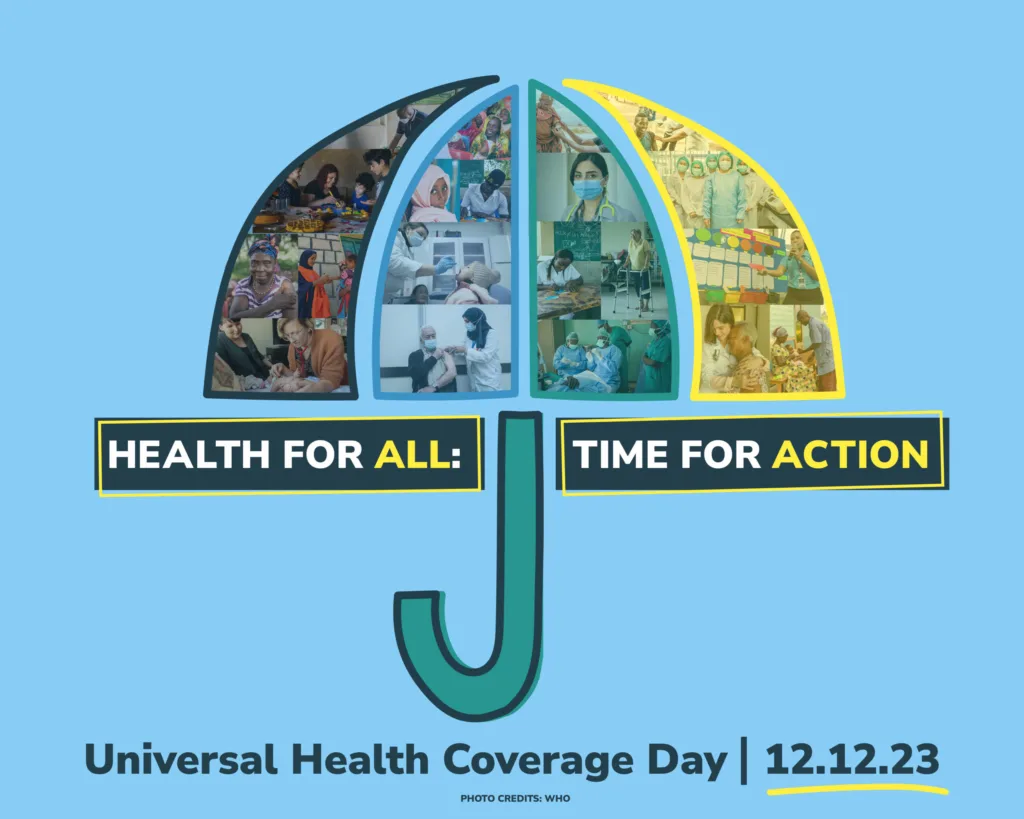
Universal Health Coverage 2023 means #HealthForAll. It’s time for action!
Endorsed at the United Nations General Assembly meeting in September this year, the political declaration on universal health care reaffirms countries’ commitments to make health care accessible to all by 2030, emphasizing the centrality of universal access to health care to achieving the Sustainable Development Goals (SDGs), including those related to poverty eradication, access to education, gender equality, climate change, and peaceful and inclusive societies. The reaffirmation of the need for a people-centered approach to primary health care emphasized the importance of community engagement in addressing the challenges.
However, the Universal Health Coverage Monitoring Report 2023, released on the eve of the World Health Organization/World Bank meeting, showed a global deviation from earlier targets for progress towards universal health coverage by 2030. Progress in health coverage has slowed since 2015, and the number of people facing catastrophic out-of-pocket healthcare costs has increased.
The Civil Society Engagement Mechanism (CSEM) for UHC2030, in a commentary released after the report’s publication, emphasized the need and urgency for collective action to reconfigure the movement towards universal health care. Currently, half of the world’s population lacks access to health services, and it is estimated that more than 2 billion people incur substantial out-of-pocket healthcare costs, including 344 million people living in extreme poverty.
The COVID-19 pandemic has exacerbated existing challenges, sending countries further down the road to universal health care and highlighting the critical importance of a strong and inclusive health system.
On December 12, this #UHCDay, the global community demands immediate action from governments and responsible partners to achieve #HealthForAll by 2030. Key areas of work where more action is needed:
– Invest in universal health coverage: Prioritize health financing and financial protection so that everyone can access quality health services without falling into poverty.
– Strengthen health systems: Build equitable and sustainable health systems with primary health care at their core, linking universal health coverage with health security.
– Expand primary health care: Implement interventions, including strengthening health and disease prevention programs, to meet people’s needs across the lifespan and empower individuals, families, and communities.
– Work across sectors and communities: Governments must address environmental, social, and behavioral factors that affect health by involving communities in decision-making processes to ensure that no one is left behind.
– Encourage innovation to reach everyone: Innovate across the health system to improve efficiency, effectiveness, and affordability, overcoming barriers to access, affordability, and quality.
Today, the call is clear and distinct: It’s time for action. And the goal is accessible and appropriate health care for all. Leaders are held accountable for their commitments, and the global community is demanding a transformational approach to make #HealthForAll a reality by 2030. The time for action is now.
Also read:
Related news
Patients community data as a driver of change: how CLM helped shape HIV policy decisions in Ukraine during wartime

Global Civil-Society Coalition Sounds Alarm on Funding Re-prioritisation Threatening Community-Led HIV, TB and Malaria Services
Dozens of specialists and experts gathered in Moldova to agree on an action plan to empower the communities in EECA countries to improve HIV and TB healthcare system

UHC Day 2024: how to get the most out of this year’s campaign for your country?

